The median sale price in the City of Muskegon sat around $170,000 in early 2026. Drive four miles south into Norton Shores and the same statistic reads $285,000. Cross the channel into North Muskegon and it climbs past $380,000.
Those are not three data points on a single market. They are three markets, and the number that separates them is not distance to Lake Michigan.
The channel test
Norton Shores home prices rose roughly 22% year over year heading into 2026, one of the fastest appreciation rates in Michigan at that price point. The obvious explanation is proximity to Pere Marquette Beach or the Mona Shores school district's performing arts program. Both matter. Neither is the mechanism.
The mechanism is Mona Lake's navigable channel. A dock on Mona Lake connects to Muskegon Lake and, from there, to open Lake Michigan. That single feature lets a Norton Shores waterfront home mirror the proposition that pushed Spring Lake waterfront averages above $800,000, at a fraction of the price. Land-locked lots two blocks from the beach do not appreciate the same way, no matter how close the sand is. The channel is the asset.
Apply that test as you compare submarkets and the county median stops being useful. It starts describing an average of homes that never compete with each other.
What the same budget actually buys
Take $300,000, roughly where a dual-income first move-up buyer lands in West Michigan today, and walk it across the map.
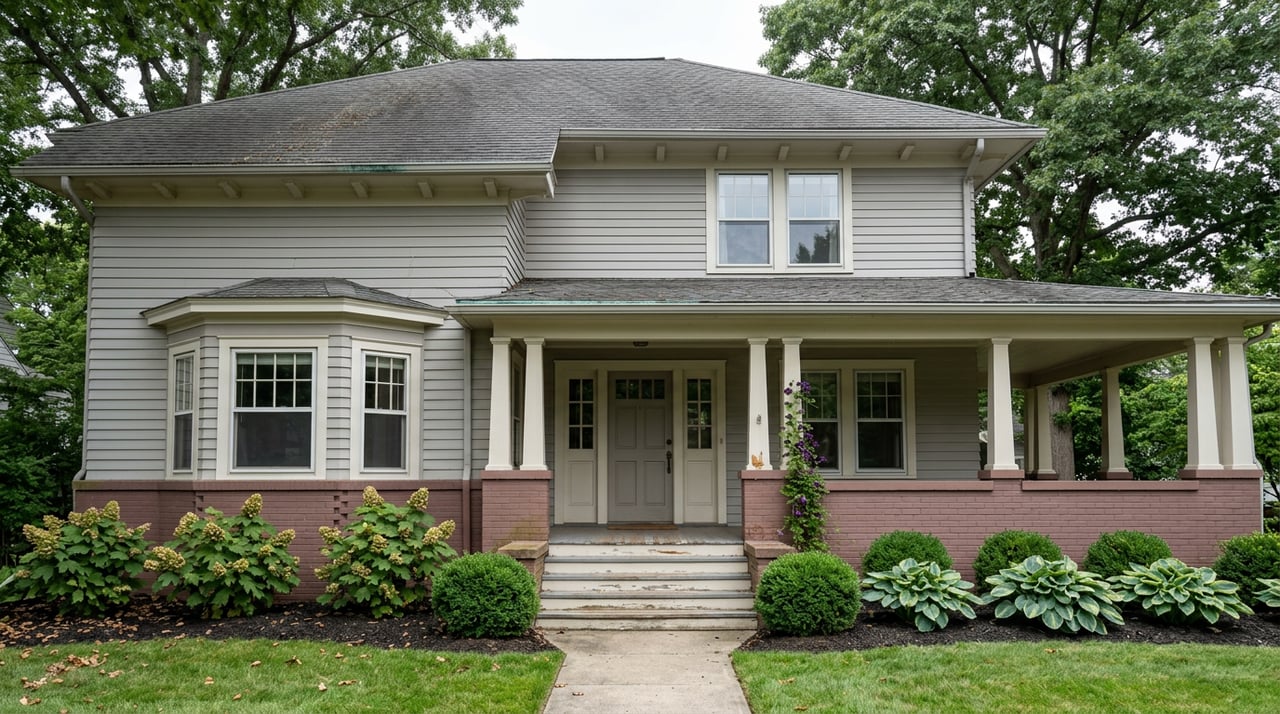
City of Muskegon proper. At this budget you are shopping well above the local median. In February 2026, Redfin recorded the median city sale at $170,000 on 28 average days on market. Movoto's July 2026 list-price median came in at $269,000 at $191 per square foot, and Zillow's home value index has hovered near $166,000. The spread between sale and list reflects a market where updated homes trade fast and tired ones sit. Three hundred thousand buys a fully renovated bungalow in Jackson Hill or Nelson, or a larger family home in Campbell Field with room to grow. What it does not buy inside city limits is water access.
Norton Shores. The same $300,000 lands you close to the median. In the three months ending May 2026, Redfin logged a $285,000 median sale, 15 days on market, and a Compete Score of 83. Expect a mid-century ranch or a two-story on a quiet cul-de-sac inside the Mona Shores district, walkable to Lake Harbor Park or a short drive to Hoffmaster State Park. You will not be on Mona Lake at this number. Waterfront on the channel is a separate tier.
Lakeside neighborhood. Along Lakeshore Drive between McGraft Park and Pere Marquette Beach, $300,000 buys a renovated cottage or a small ranch a block or two off Muskegon Lake, with the bike path and the Ruddiman Creek lagoons in walking distance. The trade is square footage. These are older, tighter homes on smaller lots, and the value is the address rather than the floor plan.
North Muskegon. Here $300,000 is entry-level. The peninsula sits between Bear Lake and Muskegon Lake, both channeled to Lake Michigan, and Homes.com data pegs the median sale near $380,000. Housing stock skews to homes built between the late 1800s and mid-1900s, with little vacant land left. At $300,000 you are buying an older, smaller home well off the water, in a community whose center of gravity is a short strip of Center Street anchored by Bernie O's and the Village Pub and Eatery.
Muskegon Lake waterfront. A different market entirely. Redfin's "Waterfront" neighborhood tally in Muskegon carried 22 active waterfront listings at a $637,000 median list, sitting a median 104 days on market. Muskegon County waterfront as a whole ran $299,000 median list on 155 listings, which tells you the county number is dragged down by inland lakes and creek frontage. At $300,000 on Muskegon Lake proper you are buying a project, a view lot with an existing structure that needs work, or a condo well back from the water.
Where the downtown story rewires demand
Two projects on the south shore of Muskegon Lake are quietly redistributing where the next round of buyers looks.
The first is The Shaw, Parkland Properties' redevelopment of the former Shaw Walker Furniture factory. The city approved a $160 million incentive package under Michigan's Transformational Brownfield Plan for what will become a $221 million project with 538 housing units and roughly 25,000 square feet of retail. The developer's target tenant mix reads like a walkable neighborhood in miniature: restaurant, bar, fitness center, daycare, pet care, hair salon, small grocer. Apartment move-ins begin January 2027 and 69 for-sale condos open in October 2027. The site sits across from Hartshorn Marina, within walking distance of Heritage Landing, the Western Avenue Entertainment District, the Farmers Market, and the Muskegon Lakeshore Bike Trail.
The second is Adelaide Pointe, billed as Michigan's first mass timber waterfront community, with a 25-yard lap pool and 28-foot glass doors that open living rooms directly onto Muskegon Lake.
The point is not that either project will single-handedly reset city prices. The point is that a downtown-adjacent buyer in 2026 is now underwriting an option on 2027 walkability, and pricing accordingly. Homes within a ten-minute walk of Western Avenue are already competing with a version of themselves that does not yet exist.
That option value is why a Jackson Hill or Nelson home near the trail can sell above where the citywide median suggests it should, and why a similar home a mile inland cannot.
The friction buyers don't see until they write an offer
The submarket you choose changes the transaction itself, not just the price. A few things worth pricing in before you tour:
- Days on market is a lie of averages. Muskegon CBSA median days on market was 39 in June 2026 per Realtor.com data on FRED. Norton Shores was 15 in May. Muskegon Lake waterfront was 104. If you write an offer on a well-priced Norton Shores ranch expecting a week to think, you have already lost it. Multiple offers with waived contingencies remain common at that price band.
- The mortgage lock-in effect is doing the work. Owners who financed at 2.8% to 3.5% in 2020 and 2021 are not trading up into a 6.5% to 7% mortgage. Michigan statewide inventory ticked up only about 1.7% year over year. What this means locally: the inventory you see is disproportionately estate sales, relocations, and life-transition sellers. Ask early who is selling and why. The answer often explains the price.
- Out-of-market buyers are setting the ceiling, not the floor. Redfin migration data shows Chicago is the top out-of-metro origin for searches into Muskegon, followed by Los Angeles and Washington. Detroit leads the search-in list for Norton Shores. A cash offer from a Chicago buyer treating a Muskegon Lake condo as a weekend property is not competing on monthly payment math. If you are financing, your inspection response and appraisal contingency are where you actually compete.
- Waterfront disclosures deserve a specialist read. Channel access, riparian rights, dock permits, and shoreline setback histories are not standard-form issues. A general home inspection will not catch a boathouse that predates current setbacks or a seawall nearing end of life. Build that specialist review into the timeline, not the punch list.
FAQ
If Norton Shores appreciated 22% and city Muskegon dropped 3.7% year over year, is the city a bad buy? The two numbers describe different products. Norton Shores appreciation is concentrated in updated homes near Mona Lake and inside the Mona Shores district. The Muskegon dip reflects a mix shift toward smaller, older housing selling on longer timelines. A renovated home in a walkable city pocket like Jackson Hill or near McGraft Park is not tracking the citywide median.
Is it worth waiting for The Shaw and Adelaide Pointe to open before buying downtown? Waiting locks in today's mortgage rate risk in exchange for a clearer 2027 picture. Buyers who want to be in place when the retail comes online are shopping now for homes within walking distance of Western Avenue. Buyers who want to see the finished neighborhood before committing are the ones who will pay the post-completion premium.
What does a Chicago or Grand Rapids buyer see in Muskegon that a local buyer sometimes misses? Monthly payment. The price gap between Grand Rapids and Muskegon at today's rates translates to several hundred dollars a month in mortgage cost for a comparable home, plus lake proximity. Locals often underweight the payment math because they already own. Out-of-market buyers underwrite it in the first spreadsheet.
If you are trying to match a real budget to a real submarket in Muskegon, the median is a starting point, not an answer. Legacy Home Leaders works through the channel test, the school district math, and the downtown timing question with each client individually, so the number you write on an offer reflects the home in front of you rather than the county average. Let's connect.