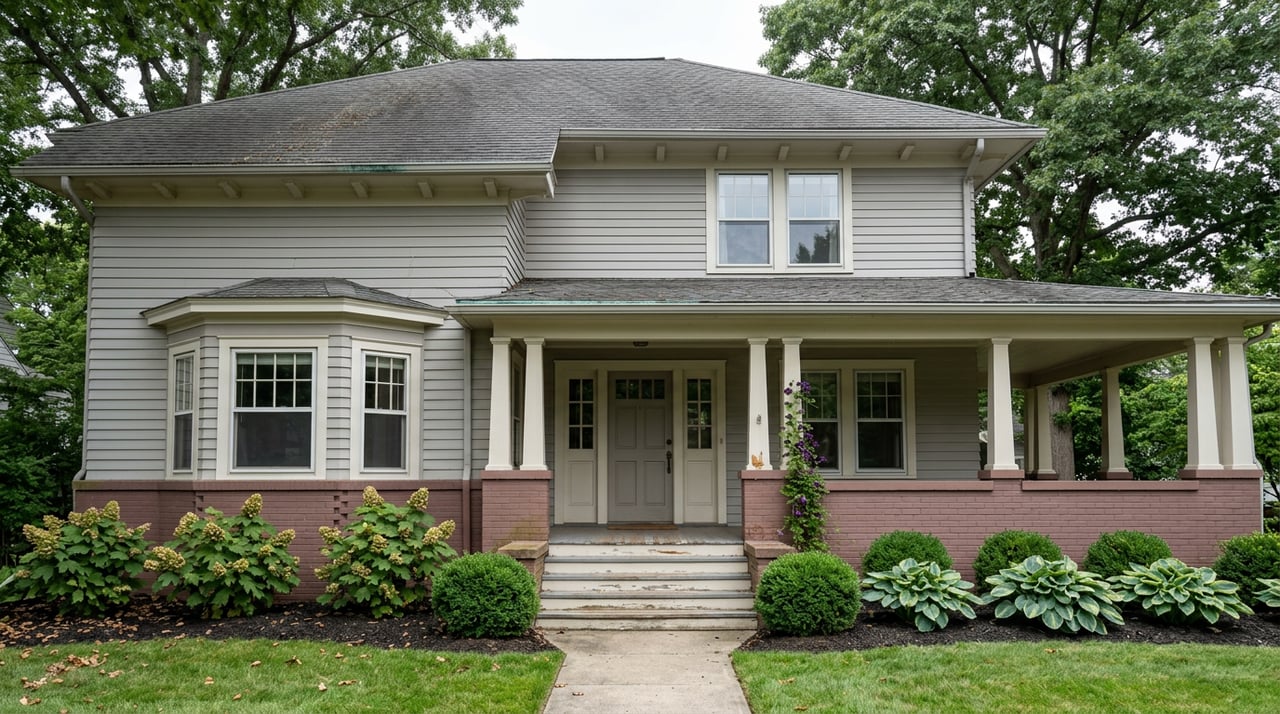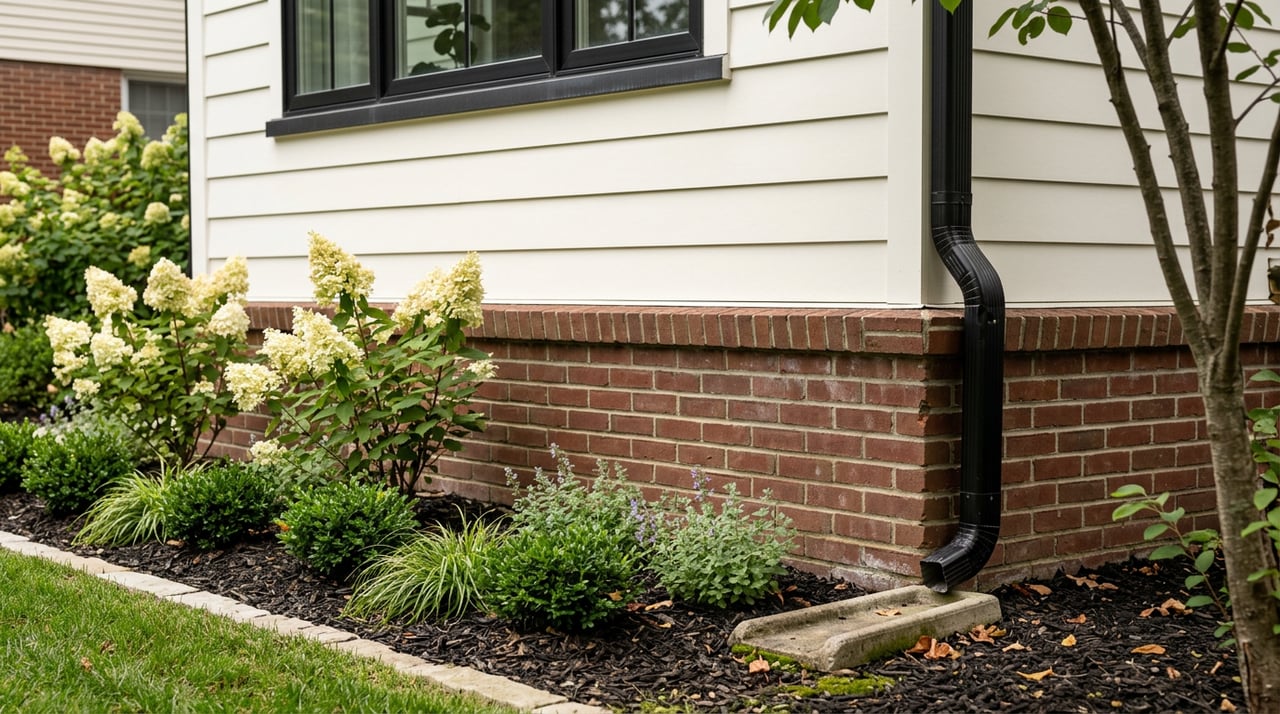
You found the house on a Thursday. By Sunday night, five other offers are in, one is cash, and your agent is asking how aggressive you want to get on the inspection contingency. The instinct in a market this compressed is to hand back everything the seller wants back: escalate the price, shorten the timeline, waive the inspection. That last one is the move worth thinking twice about.
Grand Rapids inventory sat at roughly 1.1 months of supply through June 2026, homes were going to pending in around six days, and sale prices were landing near 102% of list. That pressure is real. It is also the exact reason the inspection question deserves a strategy, not a reflex. The city's housing stock is old enough, and its soils and service lines quirky enough, that waiving a full inspection is almost never the sharpest way to win. Compressing one and adding the right specialists usually is.
What the market is actually asking of you
A six-day median time-to-pending is not a signal that the house is flawless. It is a signal that other buyers are also trying to move faster than diligence normally allows. Sellers know this. Listing agents in tight submarkets like East Grand Rapids and Heritage Hill are routinely asking for shortened inspection windows, information-only inspections, or full waivers as tiebreakers between comparable offers.
The mechanism to understand is that the inspection contingency and the price are two separate levers. Buyers who treat them as one lever, and drop both to compete, end up carrying repair risk on a house that was built when Coolidge was in office. Buyers who separate them keep the price competitive and reshape the inspection to fit the timeline. The 2025 Seidman Business Review at Grand Valley State noted the region ended the year with about a 1.4 month supply and a 6% price index gain in the City of Grand Rapids and East Grand Rapids, which tells you the seller leverage is real but not infinite. There is room to negotiate structure even when there is not much room to negotiate price.
What Grand Rapids houses actually hide
The reason a shortened inspection is preferable to a waived one is that the local housing stock has a predictable set of issues, and most of them are invisible during a showing. A buyer who has walked through fifteen houses cannot see any of the following from the living room.
| Common finding | How often it shows up in GR | Best catch |
|---|---|---|
| Galvanized steel supply lines | Nearly every older home per Chandler Inspection's local sample | General inspection, water pressure test |
| Knob-and-tube wiring remnants | Roughly 15% of homes in Chandler's sample; more concentrated in pre-1950 stock | General inspection, electrician follow-up |
| Foundation settlement or structural notes | About 70% of the local homes Chandler reviewed had something to flag | General inspection, structural engineer if bowing appears |
| Asbestos-containing materials | Over half of the older homes Chandler inspected | Visual identification during general inspection |
| Basement moisture, sump and grading issues | Standard finding in Heritage Hill, Eastown, and older neighborhoods with mature trees | General inspection plus attention to downspout routing |
| Sewer service line root intrusion | Very common in older neighborhoods with long service runs under mature trees | Sewer scope, a separate specialist |
| Elevated radon | Known to run high across many Grand Rapids neighborhoods | Radon test, a separate 48-hour kit |
Two of those, sewer service lines and radon, do not show up on a general inspection. If you skip them, you are not saving money. You are choosing not to know.
The two add-ons worth paying for before you waive anything
Sewer scope
Older service lines in neighborhoods with mature trees are the classic hidden-repair story in Grand Rapids. Roots find a hairline crack in clay tile, the line functions fine at the showing, and six months after closing the basement floor drain backs up. A sewer scope is a camera run from a cleanout down to the city main. It is the one add-on almost every local inspector recommends by name for older homes, and it is the one that catches a five-figure repair before it becomes yours. JW Inspection Services and INK Inspections both flag it as a standard recommendation for older Grand Rapids properties, and it typically runs a few hundred dollars.
Radon test
Radon is a soil-gas issue, not a house-condition issue, which means a beautifully renovated home can still test high. Grand Rapids sits in a part of Michigan where elevated readings are common enough that JW Inspection Services treats it as a standard add-on rather than an exotic one. A 48-hour test can be run alongside the general inspection with almost no impact on your timeline. If the reading comes back high, mitigation systems typically run in the $900 to $1,800 range, and that is a number worth having before you commit rather than after.
If you have to pick between waiving the inspection and offering less earnest money, waive the earnest money. Money is replaceable. A cast iron sewer line under a hundred-year-old maple is not.
A better contingency structure than waiving
Most buyers think they have two options: full inspection or no inspection. There are actually four moves you can make that keep the offer competitive without giving up the protection entirely.
Compress the window, do not remove it. A five-day inspection period instead of ten reads almost identically to a seller and gives you the same information. Local inspectors including INK Inspections and Grand Inspection Team deliver same-day or next-day reports, so five days is workable if you have the inspector booked before you write the offer.
Convert to an information-only inspection. You inspect the house and receive the report, but you agree in advance not to request repairs. You retain the right to walk away and recover earnest money if something disqualifying appears. Sellers read this almost like a waiver. You read it like a safety net.
Pre-book the specialists. Line up the sewer scope and radon test before the offer goes in so both can run inside a compressed general inspection window. This is the single easiest thing to overlook, and it is the reason most people who "shortened the inspection" end up skipping the two tests that matter most for Grand Rapids stock.
Cap your ask. Include language that says you will only request repairs above a dollar threshold, often $1,500 or $2,000. This tells the seller you are not going to nickel-and-dime them over a loose outlet cover, and it removes the fear that a full inspection means a full renegotiation.
The through line is that every one of these moves keeps the seller comfortable while preserving the information you actually need before spending, in most Grand Rapids submarkets, north of $300,000.
Where the older neighborhoods change the math
The advice above holds citywide, but the specialist add-ons carry more weight in certain areas. Heritage Hill and Eastown both have significant pre-1940 stock with original service lines, older basements, and long tree roots between the house and the city main. Homes near the Medical Mile that were built as workforce housing decades before Corewell Health and the Van Andel Institute expanded around them often have the exact combination of galvanized supply lines and knob-and-tube remnants that inspectors highlight. Ottawa Hills and the Belknap Lookout area sit in similar territory. Newer suburban builds in Rockford, Ada, and Grand Rapids Charter Township carry a different risk profile, with fewer plumbing surprises but more attention to grading, sump discharge, and attic ventilation.
Knowing which risks apply to which parts of the city is where a local agent earns the fee. A general inspection template does not adjust itself to the address. Your strategy should.
FAQ
Is it ever reasonable to fully waive the inspection in Grand Rapids?
Only in narrow cases. New construction with a builder warranty, a home you have already lived in as a tenant, or a family transaction where the history is fully known. For a standard resale in an established neighborhood, waiving means accepting the base rates of the issues in the table above without a chance to price them in.
How much should a full inspection package cost?
Base inspections in Grand Rapids typically start around $425 per JW Inspection Services, with sewer scope and radon each adding a few hundred more. A complete package with both add-ons commonly lands in the $700 to $900 range for a mid-sized single family home.
If the seller has a pre-listing inspection, can I rely on it?
Read it, note what is missing, and still do your own if the budget allows. A pre-listing inspection tells you what the seller chose to know. Your inspection tells you what you need to know. The two are not the same document even when they cover the same house.
What about older homes with 203(k) or renovation financing?
Michigan Inspection Services and other specialists offer 203(k) consulting that documents required repairs to HUD standards. If you are financing an older Heritage Hill or Eastown property with a renovation loan, the inspection is not just diligence, it is part of the loan file. Build that into the timeline.
If you are preparing to write on a Grand Rapids home this month and want a second read on how to structure the inspection contingency for the specific street you are targeting, Legacy Home Leaders is happy to walk through it with you. Bring the address. We will bring the questions the report should be answering. Let's Connect.