"We can take deeper losses on the next round than we have in the past because we're overperforming due to all the private sales that we've done," Jake Eckholm, Muskegon's development services director, told MLive in March 2026.
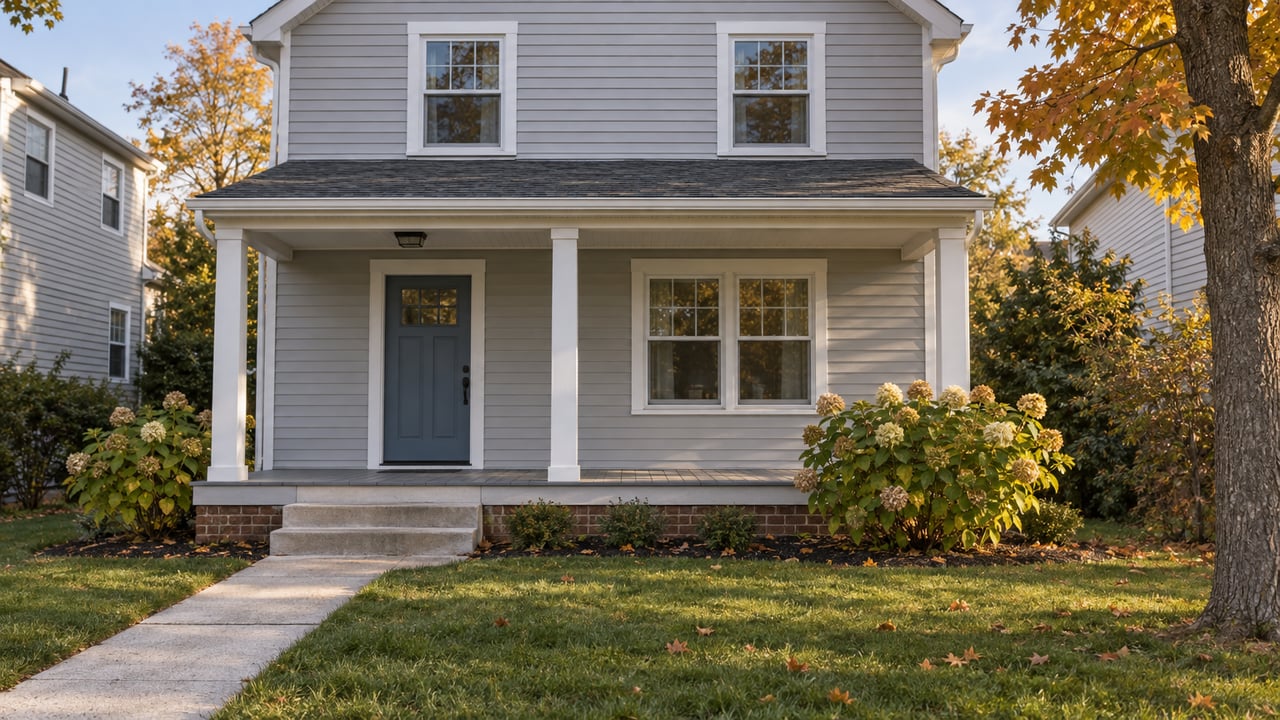
He was describing a proposal for the city to build homes that could sell for under $120,000, and maybe as low as $70,000. Price is only one part of what these homes offer. Many of Muskegon's new infill homes come with a 15-year property tax certificate that cuts the tax on the house by more than half. That certificate stays with the house only while it's someone's main home. Planning around that condition matters more than the price tag, both for the person buying and for whoever buys from them later.
A loss the city chose to take
The program behind these homes is the Muskegon Scattered Site Infill Housing Brownfield Plan. It turns vacant lots into housing and uses tax increment financing to pay for construction. In plain terms, property taxes from finished homes in the coming years repay the cost of building them. Sometimes the city hires contractors and builds itself. Other times it sells lots to private builders.
The city has been open about selling its own builds at a loss. MLive reported in April 2025 that about $5 million of Muskegon's $22.8 million in federal American Rescue Plan Act (ARPA) relief money went to housing and directly produced 42 homes. Those homes sold for under $225,000, some for as little as $129,000, and the city said it sells them below what they cost to build.
The city accepts those losses because private builders have trouble making a profit on a house that sells for $200,000 or less, which is a price range Muskegon needs. The losses are covered by everything else the program builds. Each privately built home on a former city lot adds tax revenue to the brownfield fund. Eckholm said the fund would collect just over $300,000 this year and closer to $450,000 to $500,000 next year. The more market-rate homes get built, the more below-cost homes the city can afford to sell.
Where the price tags sit against the county
The county median gives a sense of scale. In September 2026, the median sale price in Muskegon County was $280,000, up 14% from September 2025, according to the West Michigan Lakeshore Association of REALTORS. The same report counted 463 active listings, up 16%, with homes averaging 32 days on the market. Those are countywide figures, and they include lakefront homes and townships outside the city.
Most of the reported prices for new infill homes on former city lots are below that median. Green Rabbit's range runs from below it to slightly above it.
| Builder | Location | Price as reported |
|---|---|---|
| Stephens Homes and Investments | 973 and 983 Ducey Ave. | $200,000 each, proposed |
| Stephens Homes and Investments | 1003 Ducey Ave. | $225,000, proposed |
| Green Rabbit Home Builders | 460 Langley Ave. and 608 Jackson Ave., Jackson Hill | $225,000 to $290,000 range |
| City of Muskegon, ARPA-funded builds | Various | Under $225,000, some as low as $129,000, as of April 2025 |
The Ducey Avenue homes appeared in the September 9, 2025 City Commission minutes because the commission was voting on something more than a lot sale. It approved Neighborhood Enterprise Zone (NEZ) certificates for all three homes for 15 years. Staff described the certificate as a tax break that cuts future owners' property taxes "by approximately 50% for up to 15 years." At the same meeting, the commission approved a 15-year certificate for a new home at 535 Yuba St. with a stated construction cost of $200,000.
Why "about 50%" sells the certificate short, and where it doesn't
The way the tax works is set by state law. Under MCL 207.779, a new home with a certificate that serves as someone's main home isn't charged local millage. It's taxed at half the statewide average rate for main homes from the year before, multiplied by the taxable value of the house. The land isn't part of that formula. It stays on the regular tax roll. According to Treasury, owners get two bills each July and December, one for the house at the NEZ rate and one for the land at the regular rate.
Muskegon's millage is higher than the statewide average, so the discount on the house works out to more than half. The Muskegon County 2025 apportionment report puts the 2025 statewide average for main homes at 35.18 mills, which makes the NEZ rate 17.59 mills. The state's 2025 total rates report puts the regular main-home rate inside the City of Muskegon at about 43 mills, with a small difference depending on the school district.
Here is the yearly tax on each $100,000 of the house's taxable value. One mill is $1 for every $1,000 of taxable value.
| School district within the city | 2025 regular main-home rate | Regular tax per $100,000 | NEZ tax per $100,000 at 17.59 mills | Difference |
|---|---|---|---|---|
| Muskegon City School | 42.7984 mills | $4,279.84 | $1,759.00 | $2,520.84 |
| Orchard View | 43.3916 mills | $4,339.16 | $1,759.00 | $2,580.16 |
| Reeths-Puffer | 43.1094 mills | $4,310.94 | $1,759.00 | $2,551.94 |
On the house alone, the certificate cuts the tax by about 59% compared with the regular 2025 rate. The full tax bill drops by less, because the land is still taxed at the regular rate. A home on a narrow city lot has less land value to tax, which helps here. Since 2024, Muskegon zoning has allowed residential lots as small as 3,000 square feet and 30 feet wide.
The certificate covers property tax only. Muskegon also charges a city income tax. Residents pay 1% on their earnings no matter where they work, and nonresidents pay 0.5% on work done in the city, according to the city's income tax page. A household's total cost of living in the city includes both taxes.
The conditions that decide who keeps the savings
All of the savings above depend on the certificate staying in effect, and the Michigan Treasury NEZ FAQ and the statute spell out when it does and doesn't.
- It requires an owner who lives there. For a typical one- or two-unit new home, state law defines a qualifying "new facility" as one the owner lives in as their main home. If the house stops being the owner's main home, the certificate is revoked automatically.
- It transfers only to a buyer who also lives there. When the home is sold, the certificate stays in effect for the rest of its term if the new owner meets the law's requirements and lives in the house as their main home. The transfer starts with Treasury Form 4775. In Muskegon, the city's tax incentives page links to the NEZ transfer application and the city's NEZ map.
- The savings shrink in the last three years. For certificates issued after 2005, local and county operating mills come back in steps of 5/8, then 3/4, then 7/8, while all other mills are charged in full. After the certificate expires, the house goes back to regular property tax.
- Fifteen years is the limit, not the default. A certificate can last anywhere from 6 to 15 years, and the term is set in the local resolution that approves it.
This affects reselling as much as buying. Someone who buys a certificate home today and sells in year eight is selling a house whose tax break comes with a requirement to live there and has about seven years left. That suits a buyer who plans to live in the home. It's worth less to a buyer who wants a rental. When comparing a certificate home with an older home nearby, it helps to know how many years are left and which phase-out year the certificate is in. Two homes with the same price can have very different tax bills.
This is general information, not legal, tax or financial advice. Tax treatment depends on your household's situation, so confirm the details with the city assessor, a tax professional or a real estate attorney before you rely on them.
What the next round could add, and what isn't settled
Muskegon has built more rentals than for-sale homes. Since 2023, the program has added 933 rental units and 357 for-sale units, and Eckholm said the focus now needs to shift toward homes for sale. His March 2026 proposal called for splitting about 22 city-owned lots and building 40 to 50 for-sale units for about $8 million. Home sales would cover about 75% of the cost, and brownfield funds would cover the rest.
The first formal step came on August 25, 2026. The City Commission chose Trellis Architecture, led by local architect Andrea Riegler, to design three ready-to-build house plans in different sizes for Phase 4, with the contract capped at $55,670. That vote approved designs only. As of mid-October 2026, the city's published materials don't show a construction start, finished homes or a buyer application process for Phase 4, so the sub-$120,000 prices are still a proposal.
Private builders are still active too. At the same August meeting, the city approved selling lots at 213 Amity, 874 Scott, 881 Scott, 641 Glen, 216 Yuba, 252 Yuba and 509 McLaren to CSM Properties of West Michigan for 15 planned single-family homes, at a combined price of $34,875. City lot sales come with build deadlines. A deed in the city's September 2025 packet required one home per lot within 24 months, or the land would go back to the city. In March 2026, 20 lots were behind schedule, and the city was working with their owners to either start building or return the lots.
To see what's available, the city introduced a public housing dashboard in spring 2026 that tracks its housing work. Before launch, MLive described it as a map showing new housing and price ranges, homes under construction and vacant lots.
FAQ
Does every new home in the city come with an NEZ certificate? No. Each certificate is approved one at a time by the City Commission, which is why addresses like Ducey Avenue and Yuba Street appear in the meeting minutes. The city lists a $50 application fee. Treasury says the application generally has to be filed before the building permit is issued. If the local government allows it by resolution, the application can be filed up to six months after the permit is issued.
Will the 17.59-mill rate stay the same? Not necessarily. The rate is half of the statewide average from the year before, so it changes when that average changes. The figures in this post use 2025 rates.
What happens if I move out and rent the house? For a new home that qualified as the owner's main home, the certificate is revoked automatically once the owner no longer lives there. The revocation takes effect on December 31 of the year after the automatic revocation.
If you're comparing a new Muskegon infill home with an older house a few blocks away, it helps to look at the tax certificate along with the price: how many years are left, which school district's rate applies and whether the transfer paperwork is ready at closing. If you're thinking about selling a certificate home someday, the remaining years and the requirement to live there are part of what the next buyer gets, and I'm glad to help you lay that out clearly for them. Legacy Home Leaders is here when you're ready. Let's Connect.