Two buyers close on Grand Rapids homes listed at the same price, in the same month, financed at the same rate. A year later, one of them opens a tax bill that looks nothing like the other's, and one of them is still waiting on a design review before touching the exterior. Neither surprise showed up in the listing.
That gap is not a fluke of the market. It is built into how Michigan taxes property and how Grand Rapids protects six specific pieces of its own history. If you are comparing a home in Heritage Hill or Cherry Hill to one in Forest Hills or Creston, the sale price is only half the comparison. The other half shows up after you move in.
The tax bill that resets after every sale
Michigan caps how fast a home's taxable value can rise each year, but only while the same owner holds the deed. Under Proposal A of 1994, that cap is the lesser of inflation or 5% annually. The moment a property changes hands, the taxable value uncaps in the following calendar year and resets to the State Equalized Value, which by law sits at half the property's market value. For a longtime owner, that gap between the old capped number and the new SEV can be wide. For a buyer, it means the tax bill you see on the current listing is the seller's bill, not yours.
This mechanism does not care what neighborhood you're in. But it hits certain neighborhoods harder, and that is where the comparison gets interesting.
Why the jump lands hardest in the historic core
Grand Rapids' oldest and most desirable pockets, Heritage Hill in particular, are also where owners have historically stayed the longest and where appreciation has run the longest. Heritage Hill is bounded by Crescent Street to the north, Union Avenue to the east, Pleasant Street to the south, and Lafayette Avenue to the west, and it holds roughly 1,300 homes built mostly between the 1840s and the 1920s. It is one of the largest urban historic districts in the country. A homeowner who bought there decades ago has had that entire stretch of time for their taxable value to fall further and further behind the home's actual market value. When that home finally sells, the uncapping resets the taxable value to the current SEV in one jump, not a gradual climb.
Compare that to a newer subdivision in Forest Hills or a recently turned-over starter home in Creston, where the prior owner may have held the deed for five years instead of thirty. The gap between capped value and market value is naturally smaller, so the reset is smaller too. Same city, same tax formula, very different landing spot depending on how long the previous owner sat under the cap.
The practical move before you write an offer: ask your agent or the city assessor's office what the home's State Equalized Value would be in the year after a sale, not what the current tax bill shows. That number, not the seller's current bill, is closer to what you'll actually pay.
The other cost that has nothing to do with taxes
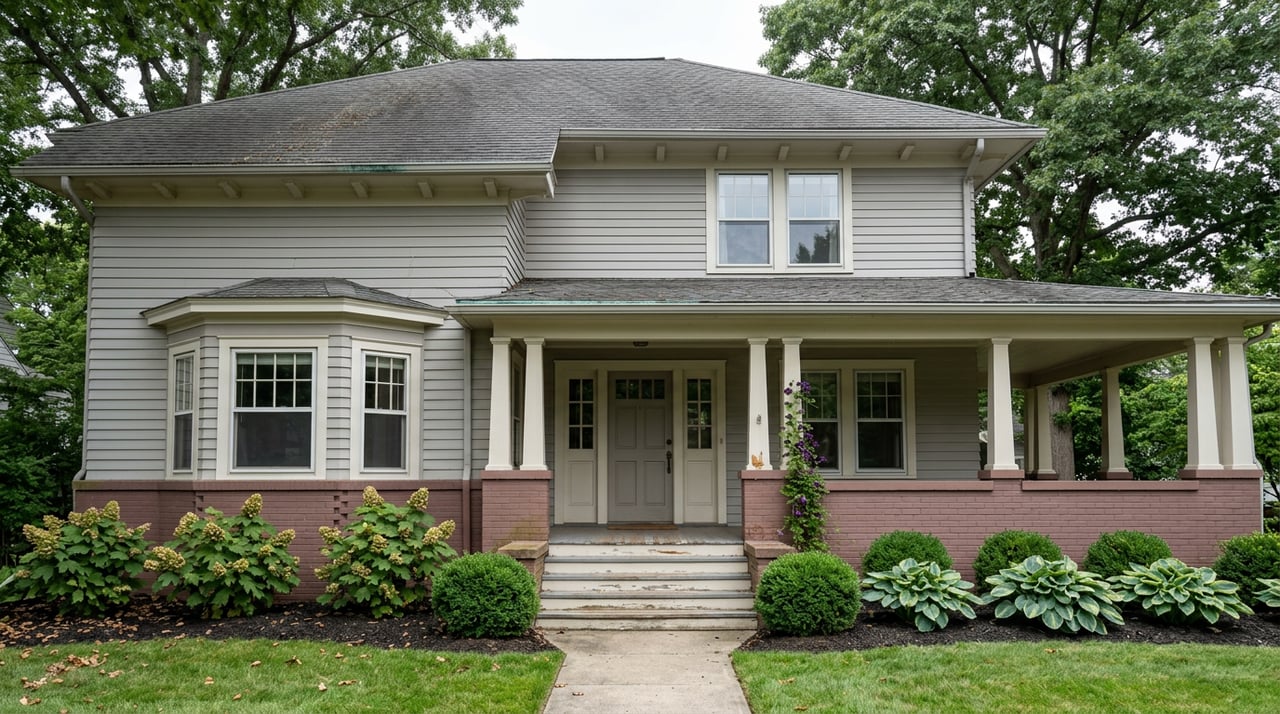
Grand Rapids protects six historic districts: Heritage Hill, Cherry Hill, Fairmount Square, Heartside, the Wealthy Theatre district, and the Ledyard Block. Buy an exterior-visible fixer in any of these and you are working under the oversight of the city's Historic Preservation Commission, a body of seven volunteers appointed by the City Commission whose job is reviewing exterior changes to roughly 2,500 designated historic properties and around 80 individual landmarks citywide. The commission's authority stops at the property line and the building's skin. It has no say over interiors or how a home is used, but new windows, exterior paint, additions, and anything touching the street-facing character of the house need its sign-off first.
That review step is real friction, and it shows up in actual renovation timelines. When Paul and Merideth Kuiper bought a 155-year-old home at 341 Charles Ave in Cherry Hill, they found significant deferred maintenance, including a foundation that needed rebuilding. One of their first calls was to the commission's historic preservation specialist, Rhonda Baker, who walked the guidelines with them and met them at the house to talk through what exterior changes would and would not clear review. A separate project at 322 Fountain St NE in Heritage Hill, led by JDE & Associates and Eastown Construction, went through the same process before earning recognition from the commission in 2025.
None of this makes historic-district homes a bad buy. It makes them a different kind of buy, one where your renovation budget needs a line item for time as much as money. A buyer in Forest Hills or Creston who wants to swap out windows or repaint the exterior does it on their own schedule. A buyer in Heritage Hill or Cherry Hill builds that decision around a review calendar first.
| District | What defines it |
|---|---|
| Heritage Hill | Roughly 1,300 homes, largest urban historic district in the country, built mostly 1840s to 1920s |
| Cherry Hill | Victorian and early 20th century homes east of downtown, now mixed with restaurants and shops |
| Fairmount Square | Smaller district just east of Cherry Hill, late 19th century craftsman and colonial revival homes |
| Heartside, Wealthy Theatre, Ledyard Block | Smaller downtown pockets centered on commercial corridors rather than residential blocks |
Where down payment assistance quietly sorts buyers
There is a third mechanism worth understanding if financing help is part of your plan. Michigan's MI 10K down payment assistance program comes with a purchase price cap of roughly $251,699 and county income limits that run from about $117,960 to $143,880 for 2026. The broader Grand Rapids market's median sale price, meanwhile, sat at roughly $335,000 as of July 2026.
A price cap set below the citywide median does not just limit who qualifies. It quietly points assistance-eligible buyers toward specific neighborhoods and away from others, whether or not anyone intended that outcome.
That gap between the assistance cap and the median means a buyer counting on down payment help is, in practice, shopping in the more affordable pockets of the city, condos, starter homes, and neighborhoods like Creston rather than the historic core or the Forest Hills and East Grand Rapids submarkets where prices run well above the cap. It is not a rule written anywhere. It is just arithmetic that shapes where offers land.
How to actually compare two houses at the same price
- Ask what the home's taxable value would reset to as State Equalized Value in the year after your purchase, not what the current owner pays now.
- Confirm in writing whether the property sits inside one of the six historic districts, since that status follows the address, not the listing description.
- If it does, build a realistic timeline for Historic Preservation Commission exterior review into any renovation plan before you count on a move-in date.
- If down payment assistance is part of your financing, check the current price cap and income limits before you fall in love with a listing above that number.
- Price out the first full year of ownership, tax reset included, before comparing two homes on sticker price alone.
FAQ
Does the tax uncapping only affect historic homes? No. Uncapping applies to every property transfer in Michigan under Proposal A. Historic neighborhoods simply tend to produce bigger jumps because owners there have often held their homes the longest, giving the gap between capped and market value more time to widen.
Can I do interior renovations in a historic district without commission review? Yes. The Historic Preservation Commission's authority covers exteriors, outbuildings, and grounds. Interior work and how the building is used fall outside its review.
Is there any way to avoid the tax reset when buying? Uncapping is triggered by most standard sales. Exemptions exist mainly for transfers between qualifying family members, not for a typical purchase from an unrelated seller, so plan your budget around the reset rather than around avoiding it.
Comparing two Grand Rapids houses on price alone leaves out the parts of ownership that show up after the sale closes. If you are weighing a historic Heritage Hill or Cherry Hill property against a newer build in Forest Hills or Creston, Legacy Home Leaders can walk through what each address actually costs to own, not just what it costs to buy. Let's Connect.