If Grand Rapids listings all start to blur together after a few scrolls, you are not alone. One house has a deep front porch and ornate trim, another is square and simple, and the next is a long, low ranch with a big picture window. When you understand the home styles common in Grand Rapids, it gets much easier to spot what fits your taste, your maintenance comfort level, and your long-term plans. Let’s dive in.
Why Grand Rapids Has So Many Styles
Grand Rapids has a broad mix of housing because much of the city was built in different waves over time. According to the city’s draft housing plan, 68.12% of owner-occupied homes and 49.52% of renter-occupied homes were built before 1960. That older housing stock is a big reason the city feels architecturally varied from one neighborhood to the next.
That age mix also shapes the buying experience. The city says more than 30,000 homes were built before 1978, which means lead-safe renovation and ongoing maintenance are important topics in many local searches. In some areas, historic preservation rules also affect what exterior changes are allowed.
Grand Rapids also continues to add newer housing. City programs aimed at making redevelopment easier have supported more infill construction, so buyers today may compare a century-old house with original character to a newer townhome-style property in the same general market. That variety is part of what makes the city interesting, but it also helps to know what you are looking at.
Historic Styles You May See
Many Grand Rapids homes are not perfect textbook examples of one style. Local planning materials describe many older homes as balloon-frame, clapboard-sided, and stylistically mixed. That means the goal is not to memorize architecture terms, but to learn the visual clues that show up most often.
Queen Anne Features
Queen Anne homes tend to look ornate and detailed in photos. Common signs include irregular floor plans, bay windows, towers or turrets, porches, balconies, stained glass, and decorative trim such as spindles and finials.
If a home feels visually busy in a charming way, this may be the style you are seeing. These houses often stand out right away because they have so much texture and variation across the exterior.
Italianate Features
Italianate homes usually feel taller, more vertical, and more formal. Look for a low-pitched hip roof, wide eaves, paired brackets, rectangular massing, and tall, narrow windows.
Compared with bungalow-era homes, Italianate properties often read as more structured and less casual. If the lines feel clean and upright, with heavier trim and a strong shape, Italianate may be a good guess.
Colonial Revival Features
Colonial Revival homes often feel symmetrical and traditional. Quick clues include multi-paned windows, dormers, pillars or columns, porticos, and a centered paneled front door.
This style can be easier to recognize because of its balanced look. If the front elevation feels orderly and classic, Colonial Revival is often the reason.
Tudor Revival Features
Tudor Revival homes usually have a dramatic roofline and a storybook feel. Common signs include steep roofs, front-facing gables, stucco or half-timbering, casement windows, leaded glass, and tall exterior chimneys.
These homes can look especially distinctive in listing photos. If the roof is steep and the exterior materials feel varied and textured, Tudor Revival may be the style you are seeing.
Early 20th-Century Styles to Know
A large share of Grand Rapids housing comes from the early 1900s. In many neighborhoods, these homes are practical, livable, and full of character without the heavier ornament found in some late-1800s houses.
Craftsman Bungalow Features
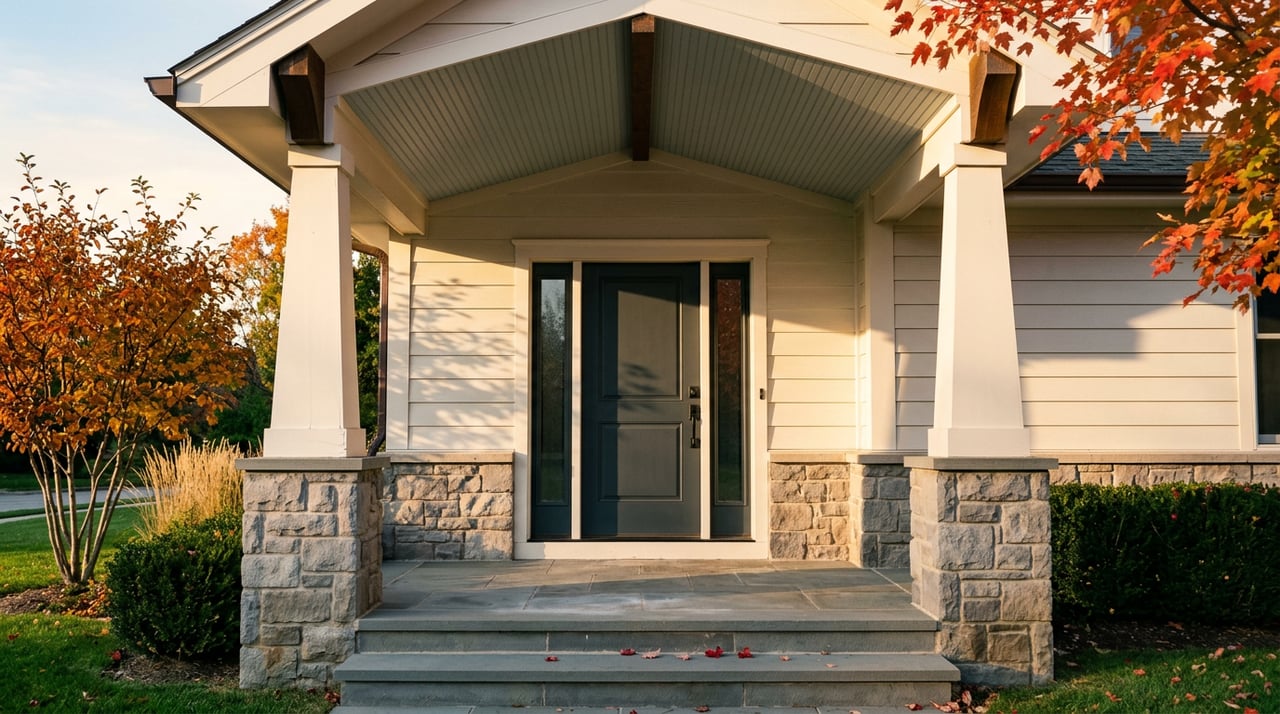
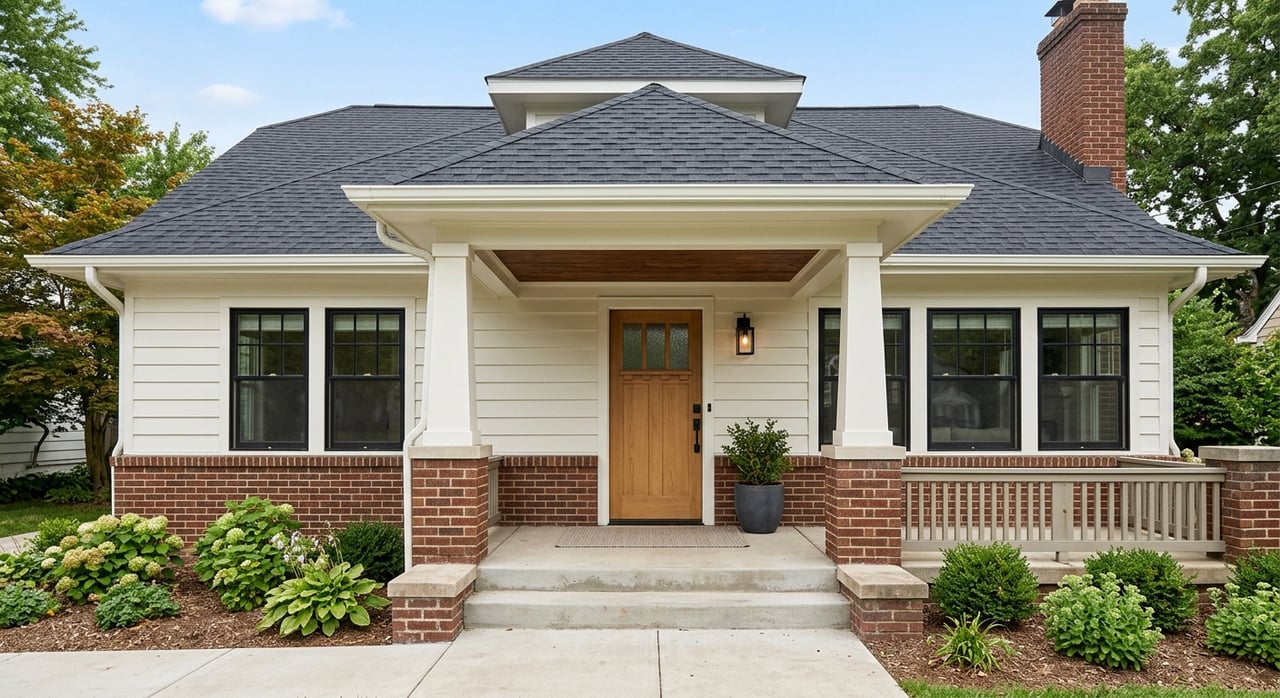
Craftsman bungalows are usually one to one-and-a-half stories tall with a low-pitched gabled roof. They often have wide eaves, exposed rafters or beams, and a deep front porch with tapered square columns.
These homes tend to feel compact and porch-forward. If a listing shows a smaller-scale house with strong horizontal lines and a welcoming front porch, it may be a Craftsman bungalow.
Four Square Features
The American Four Square is one of the easiest styles to spot once you know its shape. Look for a square footprint, a low-pitched hip roof, dormers, a front porch, and a symmetrical facade.
Midtown planning materials describe the style as a vernacular Prairie expression that may also include Craftsman or Classical Revival details. In simple terms, if the house looks boxy in a balanced, practical way, a Four Square is a strong possibility.
Prairie Features
Prairie-style homes emphasize horizontal lines. Common features include long, low massing, low-pitched hip roofs, wide eaves, grouped horizontal windows, masonry porches, and sturdy square porch supports.
In Grand Rapids, Prairie is part of the older design vocabulary that shows up in historic areas. If the home looks grounded, broad, and strongly horizontal, Prairie may be the style behind that look.
Mid-Century and Newer Styles
Not every Grand Rapids buyer is searching for a historic property. The local housing mix also includes simpler postwar styles and newer infill homes that may offer a different layout and maintenance profile.
Ranch Features
Ranch homes are broad, one-story, and low to the ground. Typical clues include a low-pitched roof, wide eaves, a sheltered off-center entry, a large picture window, and often an attached garage.
These homes usually feel more spread out than older styles. If the house reads as simple, horizontal, and easy to navigate, it may be a ranch.
Minimal Traditional Features
Minimal Traditional homes are more modest in detailing. Common signs include a side-gable roof, one-and-a-half stories, clapboard or brick siding, a central door, shutters, and little or no porch.
These homes often sit between older decorative styles and later mid-century simplicity. If the home feels traditional but pared down, this may be the style you are seeing.
Newer Infill and Townhomes
Grand Rapids also has a growing layer of newer infill housing. The city’s Permit-Ready Plans Program is designed to lower barriers for infill development, and current examples include townhome-style condominiums with two- to three-bedroom layouts, main-floor living spaces, upstairs bedrooms, and two-stall garages.
For some buyers, newer infill can mean less exterior maintenance and a more modern floor plan. If you like the location benefits of the city but want a newer build, these properties are worth watching.
Where Styles Cluster in Grand Rapids
Certain neighborhoods make it easier to see specific home styles in one place. That does not mean every home in each area fits one category, but some parts of the city have stronger architectural patterns than others.
Heritage Hill Variety
Heritage Hill is Grand Rapids’s oldest neighborhood and one of the clearest places to see the city’s wide historic range. It includes about 1,300 historic properties and more than 60 architectural styles, including Greek Revival, Italianate, Colonial Revival, Queen Anne, Shingle, and Prairie.
If you love historic detail and variety, this area offers a strong visual introduction to Grand Rapids architecture. It is one of the best examples of how many different housing eras exist within the city.
Old East End and Midtown Mix
In Old East End and Midtown, the neighborhood association says 1920s bungalows and Four Squares make up the vast majority of the housing stock. This reflects a streetcar-era wave of residential construction.
For buyers, that often means a more consistent early-20th-century feel. The area is also noted as walkable, with access to the Fulton Street Farmers Market, shops on Fulton and Michigan Streets, and downtown.
Ashby Row Character
Ashby Row, a Midtown sub-neighborhood, includes a modest mix of homes from the mid-to-late 1800s through the 1930s. Housing types include late Victorian homes, Four Squares, bungalows, and some kit homes.
That variety can appeal to buyers who want an older-home look without narrowing themselves to one dominant style. It is a good example of how Grand Rapids neighborhoods often blend multiple eras together.
Cherry Hill Eclectic Feel
Cherry Hill is known for an eclectic look shaped by pattern books and balloon-frame construction. City materials note that the homes are not all alike, which helps explain why the neighborhood can feel visually varied from block to block.
The city also describes Cherry Hill as a model revitalization project. For buyers, it is a reminder that architectural character in Grand Rapids often comes from a mix of preservation, reinvestment, and neighborhood identity over time.
How to Read Listing Photos Faster
You do not need to be an architecture expert to scan listings more confidently. A few quick visual checks can help you sort homes by style and by likely maintenance needs.
Start with the overall shape of the house. Long and low often points to Prairie or Ranch, square and symmetrical often points to Four Square, steep and decorative often suggests Queen Anne or another Victorian-era style, and a compact house with a prominent porch and tapered columns often suggests Craftsman or bungalow.
Then look closely at the windows. The city’s preservation guidelines note that window proportions, sashes, muntins, and profiles are character-defining, and that modern vinyl windows often look flatter and narrower than older wood windows. In listing photos, deeper window profiles and older trim may suggest more original features, while altered openings can point to later updates.
Style Is Only Part of the Decision
In Grand Rapids, style, age, and regulation often go together. If a home sits in a historic district, exterior work generally requires a Certificate of Appropriateness or Historic District Work Permit, and new construction on historic property requires a Historic Commission hearing.
That can affect porch repairs, window changes, additions, and some exterior updates. For the right buyer, that extra review may feel worthwhile because of the preserved character. For another buyer, a newer infill or non-historic property may be a better lifestyle fit.
Older homes may also require more maintenance planning. The city offers up to $20,000 in lead-hazard assistance for eligible homes built before 1978, and its housing plan connects older housing stock with higher repair and rehabilitation needs.
That does not mean an older home is the wrong choice. It just means your decision should factor in your comfort with upkeep, your renovation goals, and how much original detail you want to preserve.
If you are comparing Grand Rapids neighborhoods and home styles, the best move is to match the house to the way you actually want to live. A calm, tailored approach can make that process much clearer. If you want help sorting through older homes, newer infill options, or neighborhood fit in West Michigan, Claire Ritter is here to guide you with clear advice and no pressure.
FAQs
What home styles are most common in Grand Rapids neighborhoods?
- Grand Rapids includes a mix of Queen Anne, Italianate, Colonial Revival, Tudor Revival, Craftsman bungalow, Four Square, Prairie, Ranch, Minimal Traditional, and newer infill or townhome-style housing.
What neighborhood in Grand Rapids has the most historic home styles?
- Heritage Hill is the clearest place to see the city’s broadest historic range, with about 1,300 historic properties and more than 60 architectural styles.
What should buyers know about older homes in Grand Rapids?
- Many Grand Rapids homes were built before 1960, and more than 30,000 were built before 1978, so buyers should think about long-term maintenance, lead-safe renovation planning, and possible exterior review rules in historic districts.
How can you identify a Four Square home in Grand Rapids?
- A Four Square usually has a square footprint, a low-pitched hip roof, dormers, a front porch, and a symmetrical front exterior.
How can you tell if a Grand Rapids listing is a Craftsman bungalow?
- Look for a one- to one-and-a-half-story home with a low-pitched gabled roof, wide eaves, exposed rafters or beams, and a deep front porch with tapered square columns.
Do historic district homes in Grand Rapids have extra exterior rules?
- Yes. The city says exterior work in a historic district generally requires a Certificate of Appropriateness or Historic District Work Permit, and new construction on historic property requires a Historic Commission hearing.